
House cleaning checklist for first professional visit
Hiring a house cleaner for the first time is exciting-and a little nerve-racking. You want the visit to be worth the money, but it's not always obvious what "standard cleaning" actually covers or how much you should pick up before they arrive.
Below is a practical, room-by-room guide to what most U.S. cleaning companies include in a first standard house cleaning visit (not a deep clean), plus what to do beforehand so they can clean efficiently. Always compare this with the checklist your specific cleaner provides, because every company is a little different.1 2
What a "standard first visit" usually covers
On a typical first standard visit, cleaners focus on surface-level cleaning and general upkeep:
- Dusting reachable surfaces (furniture tops, shelves, decor)
- Vacuuming carpets and rugs
- Sweeping and mopping hard floors
- Wiping kitchen counters and appliance exteriors
- Cleaning and disinfecting bathroom fixtures, mirrors, and counters
- Emptying trash and doing light straightening
Industry guides describe standard or regular cleaning as these routine tasks, while deep cleaning adds things like detailed baseboard scrubbing, cleaning inside appliances, and tackling hard-to-reach grime.1 2
The bottom line: a standard first visit gets your home looking and feeling fresh, but anything that requires moving heavy items, scrubbing built-up grime, or cleaning inside appliances is usually an add-on or "deep clean" service.
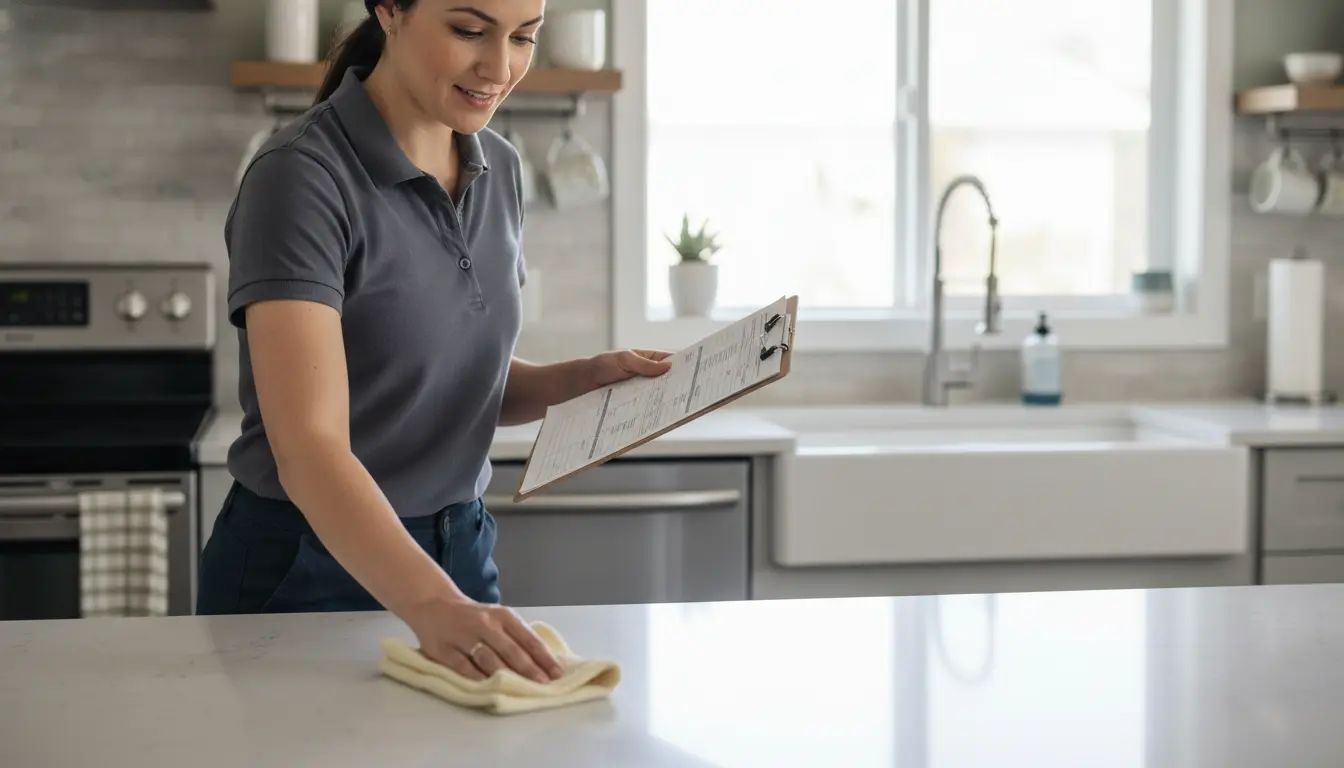
Whole-home tasks cleaners do in almost every room
Most professional house cleaners repeat a core set of tasks across the whole home during that first visit:
- Dusting furniture tops, shelves, decor, picture frames, and reachable vents
- Wiping high-touch spots like door handles and light switches (often part of a standard checklist)
- Vacuuming carpets, rugs, and floor edges
- Sweeping and mopping hard floors
- Emptying trash and relining bins
- Light straightening, like folding throw blankets or aligning pillows
Think of this as the "every room baseline" that gets layered with more specific tasks in kitchens, bathrooms, and bedrooms.
Room-by-room first-visit checklist
Use this as guidance-you can adapt it to your home and confirm details with your cleaner.
Kitchen
Kitchens usually get extra attention because they collect grease and crumbs fast. A standard first visit often includes:1
- Wiping countertops and backsplash areas that are easy to reach
- Wiping appliance exteriors (fridge doors, dishwasher front, oven door, microwave exterior)
- Cleaning and shining the sink and faucet
- Spot-wiping cabinet fronts where there are obvious splashes
- Wiping table and chairs
- Vacuuming and mopping kitchen floor
- Emptying trash and recycling
What's usually not included unless requested as an add-on or deep clean:
- Inside the oven or refrigerator
- Pulling out appliances to clean behind them
- Scrubbing cabinet interiors or fully degreasing cabinet fronts
Helpful prep: Clear as much as you reasonably can off counters (mail, paperwork, small appliances you don't use daily) so they can actually clean the surfaces.
Bathrooms
Most standard checklists give bathrooms a thorough surface clean because of hygiene:1
- Scrubbing and disinfecting toilets (bowl, seat, exterior)
- Cleaning sinks, faucets, and countertops
- Cleaning tubs/showers and fixtures (standard soil levels; heavy soap scum is often a deep-clean item)
- Wiping and shining mirrors
- Dusting reachable light fixtures and vent covers
- Emptying bathroom trash
- Vacuuming and mopping floors
Helpful prep: Put away small toiletries on the counter and in the shower where possible; hang up towels you want left out and remove any you want laundered separately.
Bedrooms
A standard first bedroom clean usually includes:
- Making beds (often with fresh sheets if you leave them out on the bed)
- Dusting nightstands, dressers, lamps, and decor
- Light dusting of headboards and reachable frames
- Vacuuming or sweeping and mopping floors and rugs
- Emptying bedroom trash
Helpful prep: Pick up clothes from floors and surfaces, clear nightstands of clutter, and place fresh linens on beds if you want them changed.
Living areas, family rooms, and hallways
Common areas tend to be the most visible spaces, so cleaners concentrate on making them look put-together:
- Dusting coffee and side tables, TV stands, shelves, mantels
- Spot-wiping visible smudges on tables and doors
- Light dusting of TVs and electronics (usually dry, not with spray)
- Vacuuming or mopping floors and rugs
- Quick tidy of sofa pillows and throws
Some cleaners will lightly vacuum upholstered furniture and under sofa cushions on a standard visit; others treat that as an add-on. Ask if this matters to you.
Entryway, stairs, and "in-between" spaces
These transition spaces are often included but can be easy to forget about:
- Tidying and sweeping/mopping the entry floor
- Wiping inside front-door glass and obvious fingerprints
- Dusting and wiping stair railings and banisters
- Vacuuming stairs, including edges
- Quick surface wipe in laundry room or mudroom (if easily accessible)
If your entry is heavily cluttered with shoes, bags, or gear, most cleaners will clean around it unless you tidy first.
What to tidy and prep before cleaners arrive
Most companies expect you to pick up, not clean. They provide cleaning; you provide access to the surfaces. Doing a quick reset beforehand lets them spend their paid time on actual cleaning, not organizing.
Here's a simple pre-visit routine:
- Clear floors: Pick up toys, clothes, pet items, and shoes from main walkways.
- Declutter surfaces: Move stacks of paper, open packages, and random items off counters and tables.
- Tidy dishes: Either load the dishwasher or at least consolidate dirty dishes in the sink so they can clean counters.
- Bathroom reset: Put away makeup, hair tools, and small bottles so they can wipe the whole counter.
- Secure valuables and sensitive items: Store cash, jewelry, medications, and confidential documents out of sight.
- Contain pets: Crate, gate, or place pets in a specific room per your cleaner's policy.
- Share instructions: Leave a note or message about alarm systems, where to park, rooms to skip, and surfaces that need extra care.
- Products and tools: Confirm in advance whether they bring supplies. If you prefer specific or hypoallergenic products, set them out clearly.
Twenty minutes of light tidying can easily translate to twenty extra minutes of actual deep scrubbing.
Common things standard cleaners don't handle
To avoid surprises, it helps to know the usual limits of a standard first visit. Industry and consumer guides note that many house cleaners won't handle certain tasks, especially without prior agreement:3
- Exterior areas: Garages, patios, and outside windows are typically excluded.
- High or risky work: Anything requiring tall ladders or reaching beams/very high shelves is often off-limits.
- Environmental hazards: Significant mold, pest infestations, or biohazard-level mess need specialized remediation.
- Detailed wall or blind washing: Vertical surfaces, full wall washing, and blind slat-by-slat cleaning are usually deep-clean or specialty items.3
- Heavy decluttering or organizing: Sorting piles, organizing closets, or managing hoarder-level clutter is a different type of service.
- Carpet steam cleaning: Standard visits usually include vacuuming only, not hot-water extraction or steaming.3
Finally, if your home hasn't had a thorough clean in a long time, some companies require a deep clean first before you move to a regular maintenance schedule.2 That protects both you and the cleaners from unrealistic expectations.
Conclusion
Use this checklist as a conversation starter with your cleaning company so your first visit focuses on the rooms and tasks that matter most to you-and nothing important gets lost in translation.